











[Topic unique] Skype : la téléphonie gratuite par p2p [MAJ 31/05/05]
Dernière réponse : dans Le monde de Windows

Faire du téléphone par internet totalement gratuitement avec une qualité sonore meilleure que le téléphone c'est enfin possible
PC sous Windows 2000 ou XP
Processeur de plus de 400 Mhz
128 Mb RAM
10 M d'espace libre
Minimum 33.6 Kbps modem
Version actuelle : 1.2.0.48

Site officiel :
http://www.skype.com
Téléchargement :
http://www.skype.com/products/skype/windows/?autoload=t...
Autres pages sur : topic unique skype telephonie gratuite p2p maj
Lassé par la pub ? Créez un compte
J'ai fait un test avec un ami. Il n'avait pas de micro, je n'ai donc pas pu entendre mais d'après lui la qualité est au moins équivalente au téléphone. Il était bluffé.
A noter, aucun réglage à faire.
Par contre, sur un athlon 750, ca me prenait 30-35% de charge CPU (15-20% sur un duron 1Ghz)... J'espère que ça s'améliorera dans les versions suivantes.
A noter, aucun réglage à faire.
Par contre, sur un athlon 750, ca me prenait 30-35% de charge CPU (15-20% sur un duron 1Ghz)... J'espère que ça s'améliorera dans les versions suivantes.
Un peu plus d'info sur le site aujourd'hui :
P2P Telephony Explained - For Geeks Only
See also the Tech section in the FAQ for answer to specific questions
Peer-to-peer (“P2P”) technology was first widely deployed and popularized by file-sharing applications such as Napster and KaZaA. In this context, P2P technology allows users to share, search for and download files. The P2P moniker has been widely used and just as often abused. Companies both large and small, self-proclaimed “pundits” and others to trying to cash in on the “P2P buzz” use this term as long as it involves some direct communication between users or nodes. This description of P2P completely misses the point.
A true P2P system, in our opinion, is one where all nodes in a network join together dynamically to participate in traffic routing-, processing- and bandwidth intensive tasks that would otherwise be handled by central servers.
A true P2P application empowers small teams with good ideas to develop software and businesses that can successfully challenge those of large companies. True P2P, when applied to ripe markets, is disruptive technology.
FastTrack (the P2P technology behind KaZaA) was the first truly decentralized P2P application and pioneered the concept of SuperNodes. This approach has since been adopted by numerous file-sharing technologies such as recent versions of Gnutella.
Decentralized P2P networks, such as FastTrack, have several advantages over traditional client-server networks. This type of network scales indefinitely without decreasing search time and without the need for costly centralized resources. They utilize the processing and networking power of the end-users machines since these resources always grow in direct proportion to the network itself. Each new node added to the network adds potential processing power and bandwidth to the network. Thus, by decentralizing resources, second generation (2G) P2P networks have been able to virtually eliminate costs associated with a large centralized infrastructure.
For the Kazaa founders P2P telephony became a natural next step where P2P could have a significant disruptive impact and Skype was founded to develop the first P2P telephony network.
Internet-based telephony – Voice-over-IP – (VoIP) has been around for years but has not reached the mainstream market. The reasons for these is quite clear to those who have used VoIP software:
Products which have a true cost-saving advantage over standard telephones do not have comparable quality.
Call-completion rates are very low due to firewalls and the use of Network Address Translation (which renders over 50% of residential computer not able to communicate with traditional VoIP software).
The User Interface is typically bloated and requires lots of configuration and technical skills.
Centralization can overcome some of these difficulties by routing calls through firewalls or NAT's. However, this brings the cost of running the network to levels approaching that of the existing telecom networks. In addition, these costs scale proportionally with the number of users. The result is that companies operating such services typically allocate very little resources on their servers per user which seriously degrades the call quality.
Utilizing our experience in creating the most popular decentralized P2P network in history (KaZaA) and the largest P2P-based content distribution network (Joltid PeerEnabler) the Skype team has succeeded in leveraging all of the available resources in a network. This has allowed us Skype to raise the call completion rate and quality to levels approaching, and often exceeding, that of POTS (“Plain Old Telephony System). This is all being achieved without the need for costly centralized resources. IN addition, we also like to think that we have created the most user friendly interface around!
These are some of the techniques that Skype employs to deliver state-of-the-art IP-based telephony:
Firewall and NAT (Network Address Translation) traversal:
Non-firewalled clients and clients on publicly routable IP addresses are able to help NAT’ed nodes to communicate by routing calls. This allows two clients who otherwise would not be able to communicate to speak with each other. Because the calls are encrypted end-to-end, proxies present no security or privacy risk.
Likewise, only proxies with available spare resources are chosen so the performance for these users is not affected.
Several new techniques were also developed in order to avoid end-user configuration of gateways and firewalls, whose non-intuitive configuration settings typically prohibit the majority of users from communicating successfully. In short, Skype works behind the majority of firewalls and gateways with no end user configuration necessary.
Global decentralized user directory:
Most instant message or communication software requires some form of centralized directory for the purposes of establishing a connection between end users in order to associate a static username and identity with an IP number that is likely to change. This change can occur when a user relocates or reconnects to a network with a dynamic IP. Most Internet-based communication tools track users with a central directory which logs each username and IP number and keeps track of whether users are online or not. Central directories are extremely costly when the user base scales into the millions; not having to deal with this allows Skype to focus all of our resources on developing cutting-edge functionality.
P2P network technologies such as FastTrack, used by KaZaA, would be suitable for decentralizing this, if not for the fact that these networks are fragmented in nature – a search does not reach all nodes in the network. Clearly, in order to deliver high quality telephony with the lowest possible costs, a third generation of P2P technology (“3G P2P”), or Global Index (GI) was a necessary development and represents yet another paradigm shift in the notion of scaleable networks. The Global Index technology is a multi-tiered network where supernodes communicate in such a way that every node in the network has full knowledge of all available users and resources with minimal latency
Intelligent routing:
By using every possible resource, Skype is able to intelligently route encrypted calls through the most effective path possible. Skype even keeps multiple connection paths open and dynamically chooses the one that is best suited at the time. This has the noticeable effect of reducing latency and increasing call quality throughout the network.
Security:
Skype encrypts all calls and instant messages end-to-end for unrivaled privacy.
Super-simple UI:
We believe that software should work for you and not against you and so we have designed Skype to be dead-simple to use – people who can use Windows and telephones will feel at home with Skype immediately.
See also the Tech section in the FAQ for answer to specific questions
Peer-to-peer (“P2P”) technology was first widely deployed and popularized by file-sharing applications such as Napster and KaZaA. In this context, P2P technology allows users to share, search for and download files. The P2P moniker has been widely used and just as often abused. Companies both large and small, self-proclaimed “pundits” and others to trying to cash in on the “P2P buzz” use this term as long as it involves some direct communication between users or nodes. This description of P2P completely misses the point.
A true P2P system, in our opinion, is one where all nodes in a network join together dynamically to participate in traffic routing-, processing- and bandwidth intensive tasks that would otherwise be handled by central servers.
A true P2P application empowers small teams with good ideas to develop software and businesses that can successfully challenge those of large companies. True P2P, when applied to ripe markets, is disruptive technology.
FastTrack (the P2P technology behind KaZaA) was the first truly decentralized P2P application and pioneered the concept of SuperNodes. This approach has since been adopted by numerous file-sharing technologies such as recent versions of Gnutella.
Decentralized P2P networks, such as FastTrack, have several advantages over traditional client-server networks. This type of network scales indefinitely without decreasing search time and without the need for costly centralized resources. They utilize the processing and networking power of the end-users machines since these resources always grow in direct proportion to the network itself. Each new node added to the network adds potential processing power and bandwidth to the network. Thus, by decentralizing resources, second generation (2G) P2P networks have been able to virtually eliminate costs associated with a large centralized infrastructure.
For the Kazaa founders P2P telephony became a natural next step where P2P could have a significant disruptive impact and Skype was founded to develop the first P2P telephony network.
Internet-based telephony – Voice-over-IP – (VoIP) has been around for years but has not reached the mainstream market. The reasons for these is quite clear to those who have used VoIP software:
Products which have a true cost-saving advantage over standard telephones do not have comparable quality.
Call-completion rates are very low due to firewalls and the use of Network Address Translation (which renders over 50% of residential computer not able to communicate with traditional VoIP software).
The User Interface is typically bloated and requires lots of configuration and technical skills.
Centralization can overcome some of these difficulties by routing calls through firewalls or NAT's. However, this brings the cost of running the network to levels approaching that of the existing telecom networks. In addition, these costs scale proportionally with the number of users. The result is that companies operating such services typically allocate very little resources on their servers per user which seriously degrades the call quality.
Utilizing our experience in creating the most popular decentralized P2P network in history (KaZaA) and the largest P2P-based content distribution network (Joltid PeerEnabler) the Skype team has succeeded in leveraging all of the available resources in a network. This has allowed us Skype to raise the call completion rate and quality to levels approaching, and often exceeding, that of POTS (“Plain Old Telephony System). This is all being achieved without the need for costly centralized resources. IN addition, we also like to think that we have created the most user friendly interface around!
These are some of the techniques that Skype employs to deliver state-of-the-art IP-based telephony:
Firewall and NAT (Network Address Translation) traversal:
Non-firewalled clients and clients on publicly routable IP addresses are able to help NAT’ed nodes to communicate by routing calls. This allows two clients who otherwise would not be able to communicate to speak with each other. Because the calls are encrypted end-to-end, proxies present no security or privacy risk.
Likewise, only proxies with available spare resources are chosen so the performance for these users is not affected.
Several new techniques were also developed in order to avoid end-user configuration of gateways and firewalls, whose non-intuitive configuration settings typically prohibit the majority of users from communicating successfully. In short, Skype works behind the majority of firewalls and gateways with no end user configuration necessary.
Global decentralized user directory:
Most instant message or communication software requires some form of centralized directory for the purposes of establishing a connection between end users in order to associate a static username and identity with an IP number that is likely to change. This change can occur when a user relocates or reconnects to a network with a dynamic IP. Most Internet-based communication tools track users with a central directory which logs each username and IP number and keeps track of whether users are online or not. Central directories are extremely costly when the user base scales into the millions; not having to deal with this allows Skype to focus all of our resources on developing cutting-edge functionality.
P2P network technologies such as FastTrack, used by KaZaA, would be suitable for decentralizing this, if not for the fact that these networks are fragmented in nature – a search does not reach all nodes in the network. Clearly, in order to deliver high quality telephony with the lowest possible costs, a third generation of P2P technology (“3G P2P”), or Global Index (GI) was a necessary development and represents yet another paradigm shift in the notion of scaleable networks. The Global Index technology is a multi-tiered network where supernodes communicate in such a way that every node in the network has full knowledge of all available users and resources with minimal latency
Intelligent routing:
By using every possible resource, Skype is able to intelligently route encrypted calls through the most effective path possible. Skype even keeps multiple connection paths open and dynamically chooses the one that is best suited at the time. This has the noticeable effect of reducing latency and increasing call quality throughout the network.
Security:
Skype encrypts all calls and instant messages end-to-end for unrivaled privacy.
Super-simple UI:
We believe that software should work for you and not against you and so we have designed Skype to be dead-simple to use – people who can use Windows and telephones will feel at home with Skype immediately.
09.09.2003 Skype (TM) Beta 0.91.0.2
feature: Language selection during installation
feature: Estonian language is added
feature: busy sound is now played, if other end is busy
change: chat window improvements
change: search improvements
change: if incoming calls/messages from non-buddies are disabled, they are completely ignored now
feature: Language selection during installation
feature: Estonian language is added
feature: busy sound is now played, if other end is busy
change: chat window improvements
change: search improvements
change: if incoming calls/messages from non-buddies are disabled, they are completely ignored now
janfy a écritJ'ai fait un test avec un ami. Il n'avait pas de micro, je n'ai donc pas pu entendre mais d'après lui la qualité est au moins équivalente au téléphone. Il était bluffé.
A noter, aucun réglage à faire.
Par contre, sur un athlon 750, ca me prenait 30-35% de charge CPU (15-20% sur un duron 1Ghz)... J'espère que ça s'améliorera dans les versions suivantes.
A noter, aucun réglage à faire.
Par contre, sur un athlon 750, ca me prenait 30-35% de charge CPU (15-20% sur un duron 1Ghz)... J'espère que ça s'améliorera dans les versions suivantes.
J ai eu la meme experience, mais mon pote avait l air bluffé.
Il n en revenait pas. On a aussi testé le decallage (avec MSN 6 en parallel) et ya aucun decallage!
Que du bon
euh il parait que certains logiciels de telephonie p2p arrivent a passer a travers tous les firawalls....je vais essayer de retrouver leur noms...ayé:
"l'astuce?La qualité de communicationqu'on nous promet" mieux qu'avec un telephone"la possibilitée de voir qui a tenté de vous joindre, de paser a travers tous les firewalls(ca fera plaisir aux admin systéme) et d'encrypter vos conversations(ca va plaire aux forces de l'ordre)ah et la bete s'accapare le plus de ressources possibles(ca y a pas moyen que ca fasse plaisir a mes telechargement)"
JOy.
"l'astuce?La qualité de communicationqu'on nous promet" mieux qu'avec un telephone"la possibilitée de voir qui a tenté de vous joindre, de paser a travers tous les firewalls(ca fera plaisir aux admin systéme) et d'encrypter vos conversations(ca va plaire aux forces de l'ordre)ah et la bete s'accapare le plus de ressources possibles(ca y a pas moyen que ca fasse plaisir a mes telechargement)"
JOy.
Dans une interview accordée à CNet News.com, le très discret Niklas Zennstrom et créateur de Kazaa a confié ses plans stratégiques relatifs à Skype, le logiciel de téléphonie par P2P. On y apprend entre autres que Skype restera gratuit dans son utilisation de base, mais que des services Premium devraient être proposés.
Selon Zennstrom, le VoIP (Voice Over IP, ou téléphonie par Internet) pourrait être le second "broadband driver" après le P2P. Entendez par là que les communications vocales pourraient devenir rapidement un argument majeur de vente des connexions à haut débit pour les fournisseurs d'accès. Le consommateur y gagne en effet un réseau téléphonique performant et gratuit, quelque soit le lieu de destination de l'appel. Les principaux concurrents de Skype seraient ainsi les opérateurs classiques comme France Telecom, Deutsche Telecom, British Telecom, AT&T ou Verizon.
Dans cette optique, Zennstrom serait en discussion avec des fournisseurs d'accès intéressés pour offrir Skype à leurs abonnés, et pourrait même raccorder le logiciel aux infrastructures téléphoniques classiques d'ici un an. Le modèle économique du logiciel est extrêmement lucratif. Grâce à son architecture P2P, Skype ne nécessite quasiment aucune autre infrastructure que les serveurs nécessaires à l'authentification sur "le réseau téléphonique", un utilisateur supplémentaire ne leur coûte rien. A l'inverse, tout service Premium (messages vocaux, conférences,...) souscrit sera du bonus dans les caisses de l'entreprise.
Le reste de l'interview brosse notamment les questions de confidentialité et de sécurité des appels à travers le réseau, ainsi que le problème des écoutes téléphoniques judiciaires rendues presque impossibles à travers une telle architecture décentralisée et cryptée.
Lire l'interview :
http://news.com.com/2008-7352-5112783.html?tag=nefd_gut...
http://www.ratiatum.com/p2p.php?article=1382
Selon Zennstrom, le VoIP (Voice Over IP, ou téléphonie par Internet) pourrait être le second "broadband driver" après le P2P. Entendez par là que les communications vocales pourraient devenir rapidement un argument majeur de vente des connexions à haut débit pour les fournisseurs d'accès. Le consommateur y gagne en effet un réseau téléphonique performant et gratuit, quelque soit le lieu de destination de l'appel. Les principaux concurrents de Skype seraient ainsi les opérateurs classiques comme France Telecom, Deutsche Telecom, British Telecom, AT&T ou Verizon.
Dans cette optique, Zennstrom serait en discussion avec des fournisseurs d'accès intéressés pour offrir Skype à leurs abonnés, et pourrait même raccorder le logiciel aux infrastructures téléphoniques classiques d'ici un an. Le modèle économique du logiciel est extrêmement lucratif. Grâce à son architecture P2P, Skype ne nécessite quasiment aucune autre infrastructure que les serveurs nécessaires à l'authentification sur "le réseau téléphonique", un utilisateur supplémentaire ne leur coûte rien. A l'inverse, tout service Premium (messages vocaux, conférences,...) souscrit sera du bonus dans les caisses de l'entreprise.
Le reste de l'interview brosse notamment les questions de confidentialité et de sécurité des appels à travers le réseau, ainsi que le problème des écoutes téléphoniques judiciaires rendues presque impossibles à travers une telle architecture décentralisée et cryptée.
Lire l'interview :
http://news.com.com/2008-7352-5112783.html?tag=nefd_gut...
http://www.ratiatum.com/p2p.php?article=1382
Pour ceux que ca interresse : http://linuxfr.org/2004/01/05/14996.html
Il existe aussi une version windows
HS: capucaipalibre
Il existe aussi une version windows
HS: capucaipalibre
quelqu'un a-t-il essayé Speak Freely http://speak-freely.sourceforge.net/ svp ?
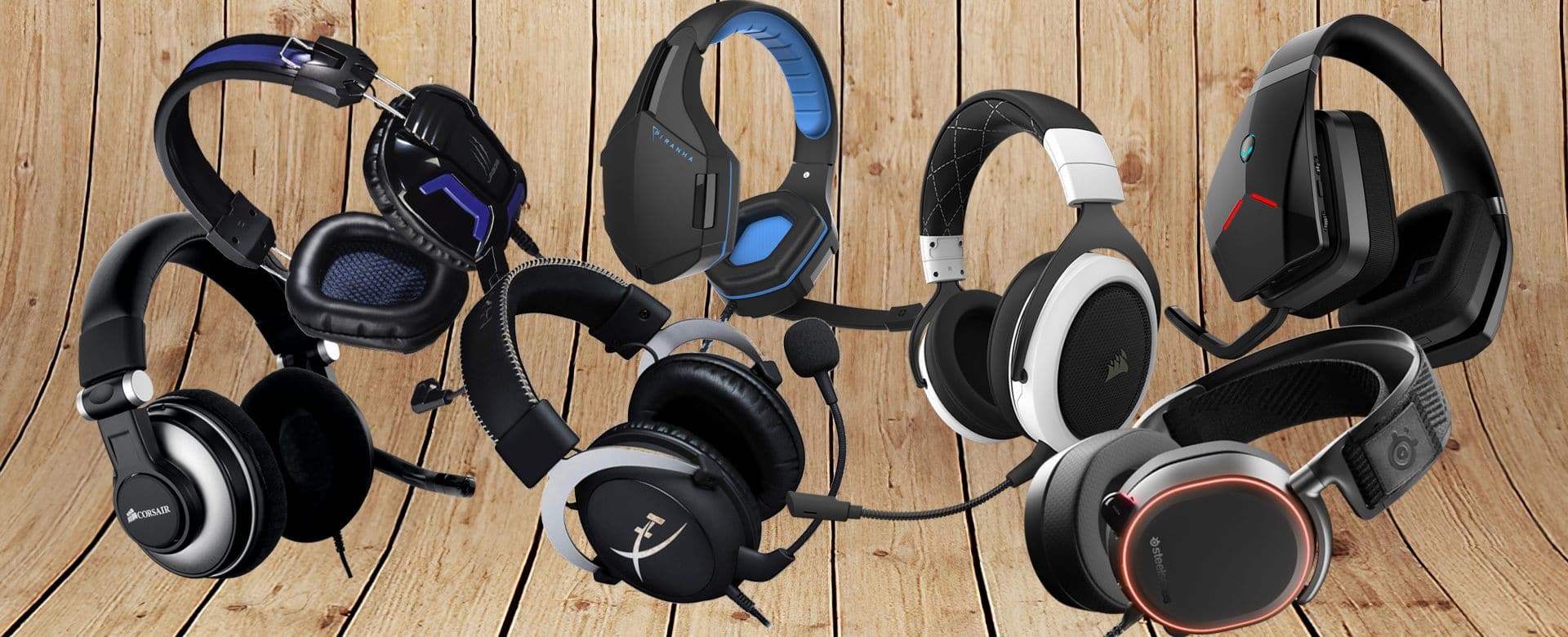
sinon, vous me conseillez quoi comme casque ?
Highl@nder a écritquelqu'un a-t-il essayé Speak Freely http://speak-freely.sourceforge.net/ svp ?
sinon, vous me conseillez quoi comme casque ?
créé un nouveau topic ça sera mieux sinon, vous me conseillez quoi comme casque ?
j'ai créé un nouveau topic pour Speak-Freely http://forum.presence-pc.com/presencepc/LogicielsJeux/sujet-4809-1.htm
si quelqu'un voulait bien rajouter un lien vers le topic Speak-Freely dans l'en-tête du topic Skype, ça serait bien.
"VoIP: Skype lève 19 millions de dollars pour venir taquiner la téléphonie classique!"
Un article intéressant où on y apprend aussi un partenariat avec Siemens.
http://www.zdnet.fr/actualites/business/0,39020715,3914...
Un article intéressant où on y apprend aussi un partenariat avec Siemens.
http://www.zdnet.fr/actualites/business/0,39020715,3914...
dans le même genre (VoIP), vous avez essayé Speak-Freely http://forum.presence-pc.com/presencepc/LogicielsJeux/s... ?
Lassé par la pub ? Créez un compte
- Contenus similaires :
- ForumTopic unique matrix reloaded
- ForumTopic unique matrox parhelia
- ForumTopic unique power metal
- articlesTopic unique 3dmark vantage
- ForumTopic unique bios 1014
- ForumTopic unique comment dã bloquer un tã lã phone
- ForumTopic unique galaxy tab
- ForumTopic unique des programmes de la tnt
- articlesTopic unique gts 450
- ForumTopic unique msi m670 s1
- Voir plus